04.06.2026
2026 FIFA World Cup: The tournament's most fashionable teams
Introducing the fashion brand playoffs for the world's premier sporting championship. What brands are worn by the new wave of football players?
From June 11 to July 19, 2026, the eyes of the whole world will be focused on the stadiums of the USA, Canada and Mexico. Three North American countries will host the FIFA World Cup, the first ever tournament involving 48 national teams. The teams will play 104 matches in 39 days, and the fate of the main trophy will be decided at MetLife Stadium in suburban New York on the final day of the tournament. For FIFA, this is the largest World Cup in the history of the competition. For brands, it's an opportunity to be at the center of an event that will be watched by billions of viewers around the world. If ten years ago football players came to training camps in identical tracksuits and rarely got into the lenses of fashion photographers, today the exit of the national team from the airport can cause no less discussion than the starting lineup before the match. On the eve of the World Cup, VILED Media conducted its own audit of the contents of sports bags and is ready to present an unofficial "style trophy" to three national teams. Each of them has found their own way to tell about themselves in the language of fashion. France teamed up with Jacquemus, Spain trusted Loewe, and Uzbekistan relied on the local brand 7SABER.
France and Jacquemus
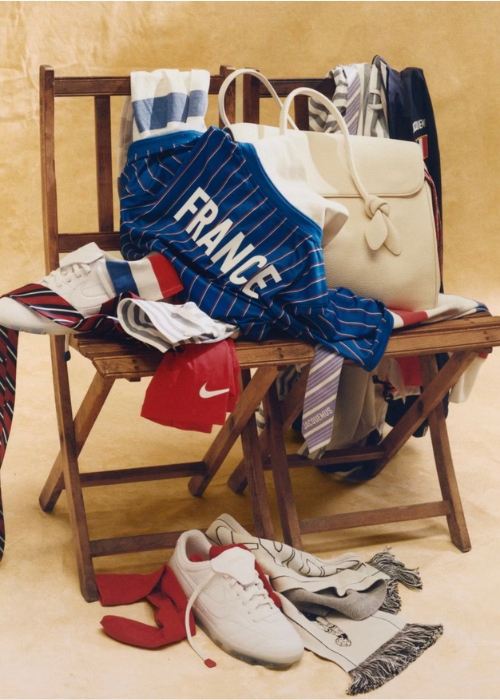
One of the main favorites of the World Cup is the French national team. The team goes to the tournament as one of the strongest teams on the planet, and the country that gave the world Zinedine Zidane, Kylian Mbappe and Chanel traditionally sets the bar high not only on the field, but also beyond. Against the background of PSG's victory in the Champions League, interest in football in France has reached a new peak. It was at this moment that Simon Port Jacmus presented a joint collection with the French Football Federation and Nike.
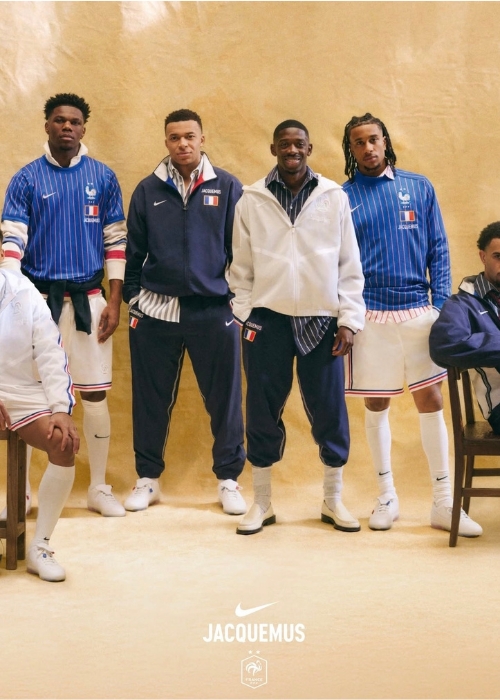
The central thing in the wardrobe was the pre-match T-shirt that the players of the national team will wear during the World Cup. For Jacmus, this collaboration turned out to be deeply personal. The designer has repeatedly talked about his love of football, and the starting point of the collection was a vintage navy blue Nike Olympic jacket, which he had kept since he was a teenager. Through this detail, the brand reinterpreted the football aesthetic of the 1990s, translating it into the language of modern French fashion.
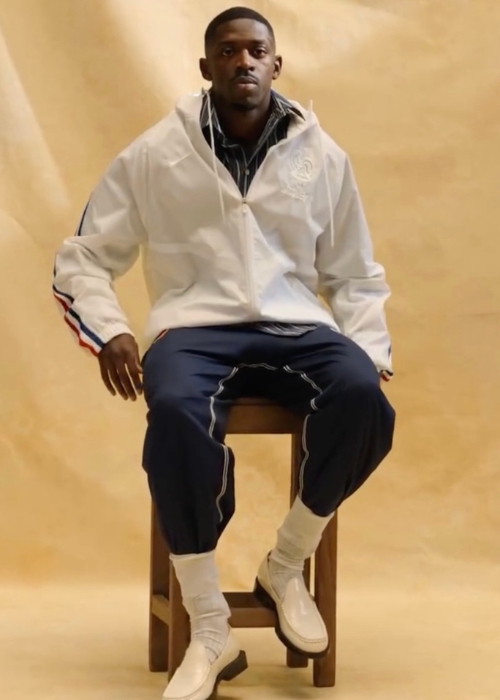
Kylian Mbappe, Aurelien Tchuameni, Marcus Thuram, Desiree Douai and Warren Zaire-Emery appeared in the advertising campaign — the players who form the face of the French national team today. The collection is built around the colors of the national flag — blue, white and red. It also features branded stripes for Jacquemus, reinterpreted through football culture. At the same time, the designer deliberately abandoned many of the complex technological materials typical of modern sports equipment. Instead, the brand uses more traditional natural fabrics, which make things look more like everyday wardrobe items than workout uniforms. Among the project's partners is the organization Sport dans la Ville, which is engaged in sports and educational programs for young people from disadvantaged areas of France. This choice highlights the social role of football in a country where the sport has long been a part of cultural and social life.
Spain and Loewe
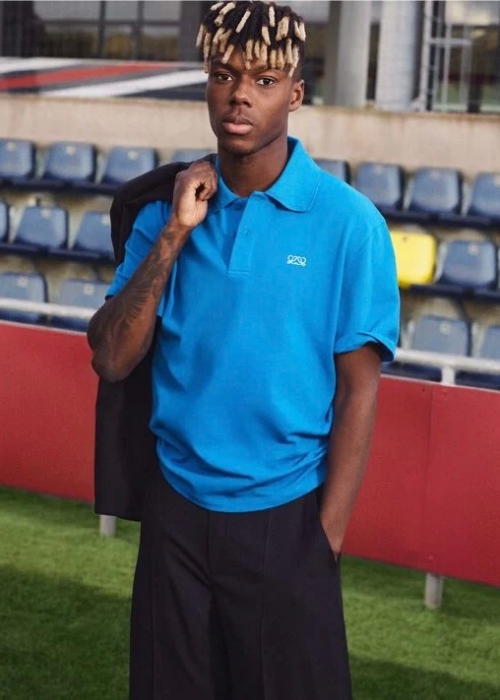
The Spaniards are another serious contender for the title. Many people call the current generation of the Spanish national team one of the brightest in recent years. The team has confidently survived the generational change and is once again among the favorites of the largest international tournaments. It is not surprising that the Loewe brand entrusted its new sports story to her.
On the eve of the World Cup, the Spanish fashion house announced a four-year partnership with the men's and women's national teams. The cooperation runs until 2030 and covers several major tournaments at once, including the 2026 World Cup, the 2027 Women's World Cup and the 2030 World Cup, which Spain will host jointly with Portugal and Morocco.
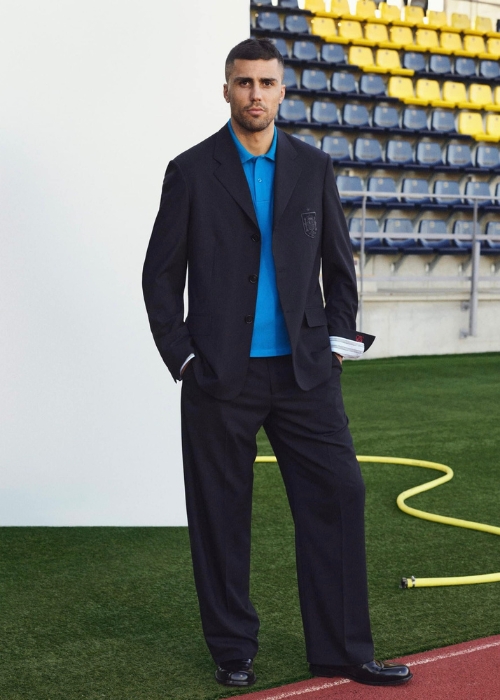
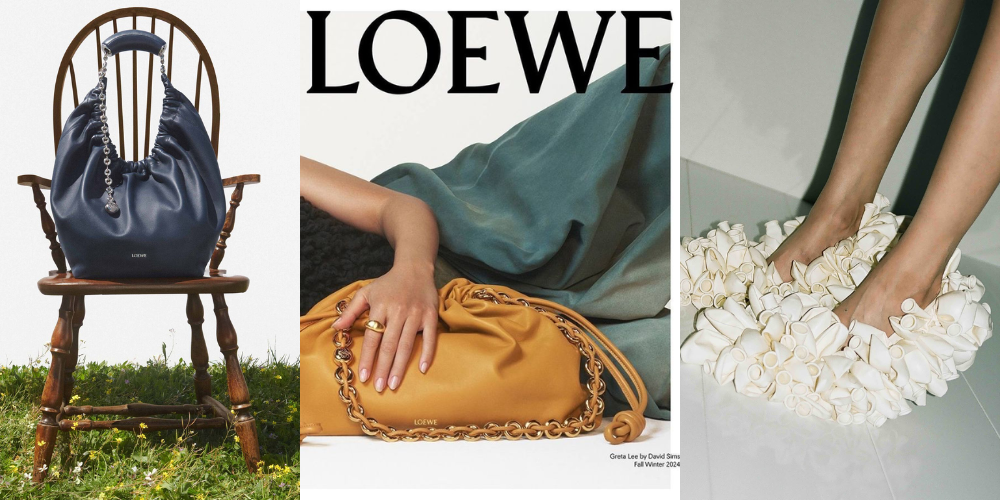
It is important that we are not talking about a game form. Loewe is responsible for the wardrobe of football players off the field: suits, casual wear, outerwear and accessories. The collection is based on the idea of discreet luxury. Each suit contains an embroidered Loewe anagram on the inside of the sleeve, a detail that only becomes noticeable when moving. In this way, the brand emphasizes its philosophy based on craftsmanship and quality of materials, rather than on demonstrative logos.
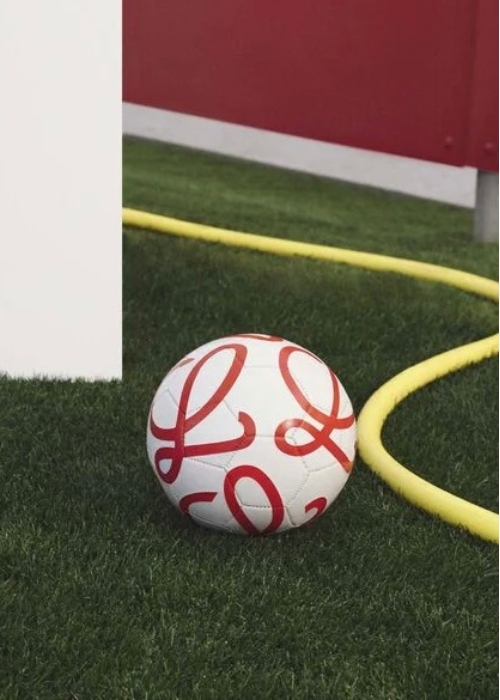
Polos, jackets and trousers of a loose fit are also prepared for players, designed for permanent flights and transfers between tournaments. Accessories occupy a special place. The collection includes enlarged versions of the iconic Amazona 180 bags and Puzzle models that have long been considered symbols of modern Loewe. The campaign was filmed at the Spanish national team's Las Rosas training base near Madrid with Pedri, Rodri, Unai Simon and Nico Williams in attendance. The time of the project launch is also symbolic. This year Loewe celebrates its 180th anniversary, and therefore cooperation with the national team looks like a meeting of two important Spanish institutions — one from the world of sports, the other from the world of fashion.
Uzbekistan and 7SABER
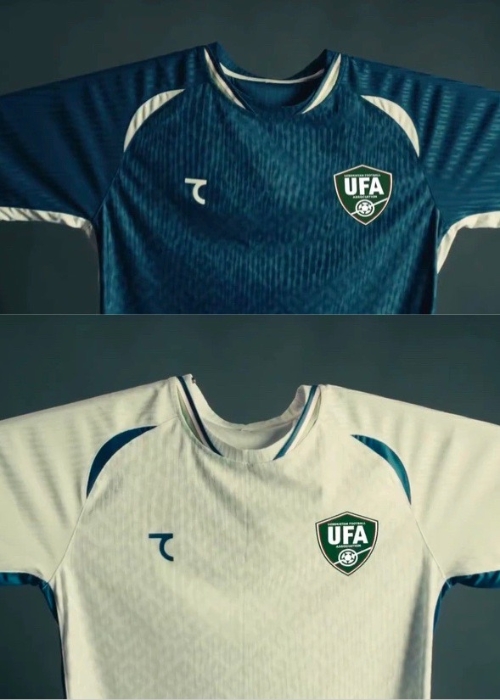
I would like to mention the national team of Uzbekistan separately. Moreover, Kazakhstani fans have an additional reason to sympathize with their neighbors. Against the background of the big names of European fashion, the team's equipment looks decent, original and does not try to copy other people's decisions at all.
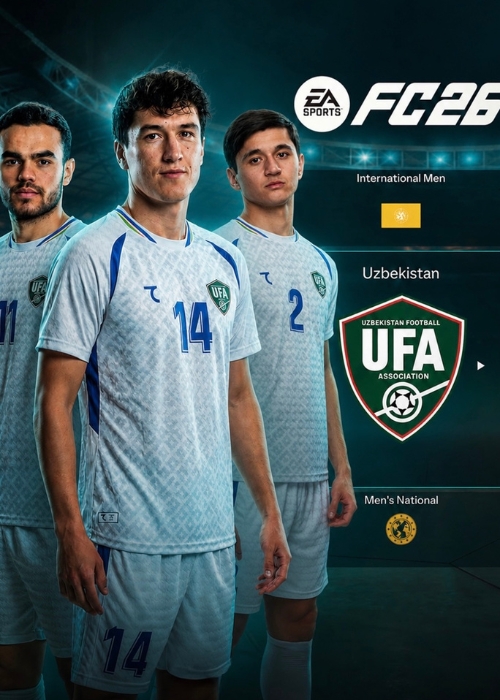
The 2026 World Cup will be the first in Uzbekistan's history. That is why the presentation of the new uniform has become a national event. The Football Federation of Uzbekistan has entrusted the development of equipment to the local brand 7SABER, relying on its own visual identity instead of cooperation with international giants of the sports industry.
The presentation was accompanied by an unusual video created using artificial intelligence technologies. The process of creating the form itself was at the center of the plot. The viewer is shown designing patterns, applying national ornaments, working with fabrics and the final appearance of players in ready-made equipment. In some scenes, the form literally comes to life and begins to move on its own, turning into a full-fledged hero of the narrative.
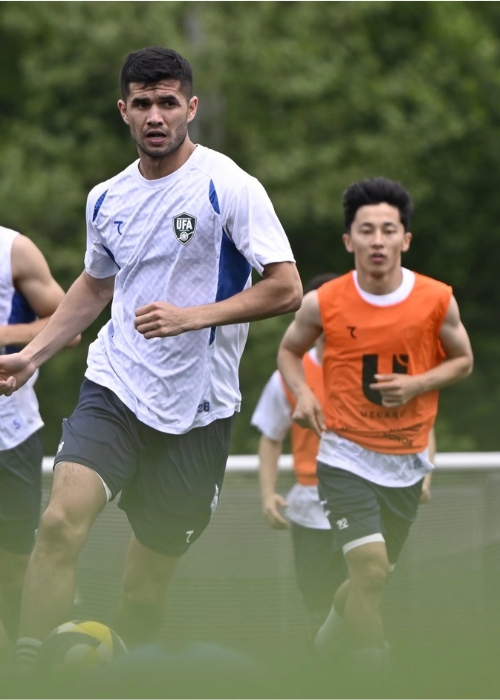
The main set is made in a rich blue color and decorated with traditional Uzbek ornaments. The guest uniform is made in white and looks more concise, while preserving national motifs. This approach is especially important for a World Cup debutant. Having entered the largest football tournament on the planet for the first time, Uzbekistan gets the opportunity to present its culture to hundreds of millions of viewers around the world. And it does this through the design language, which today is becoming as much a part of the national image as the game itself.